- The Guidance
- Posts
- What I learned attending crypto courtroom dramas in 2025
What I learned attending crypto courtroom dramas in 2025
It’s fascinating watching lawyers try to explain crypto to a captive, lay audience.

Aleks Gilbert
January 05, 2026
Hey all, Aleks here.
I keep terrible company.
Only one of my friends cares about crypto, and he isn’t what you’d call a “normie.”
This means I don’t get many opportunities to practice the art of translating cryptospeak into plain English — except, of course, through my reporting, but that’s usually a one-way conversation.
It’s why I love attending crypto trials. It’s fascinating watching lawyers try to explain, say, a crypto mixer to a captive, lay audience.
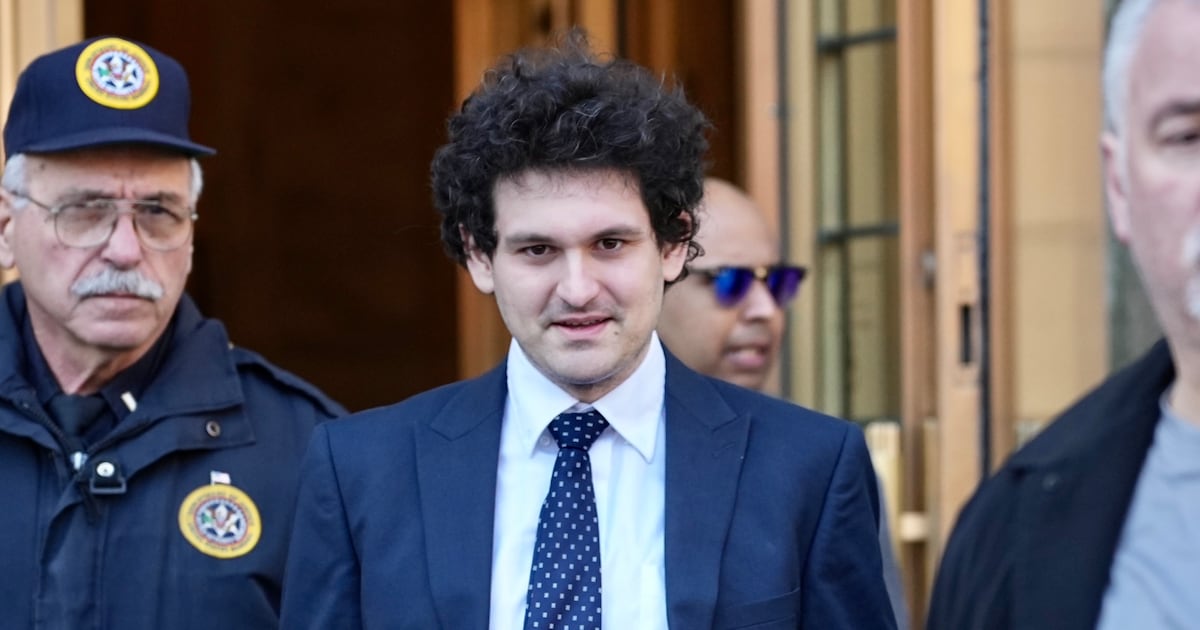
I live in New York City, which means I have the privilege of attending almost every important crypto court case. I was at Sam Bankman-Fried’s trial in 2023, and Roman Storm’s trial in 2025.
In 2025, I also attended the sentencing hearings of Celsius CEO Alex Mashinsky, Mango Markets exploiter Avraham Eisenberg, and Terra co-founder Do Kwon as well as Bankman-Fried’s appellate hearing.
Here are three things I learned over my many hours spent in federal courtrooms.
The sob stories are real
At the May sentencing of Mashinsky, I met 68-year-old David Moran, a victim who drove 800 miles to attend the hearing.
Moran was among the thousands of people who fell for Mashinsky’s lies.
“What I used to tell people in my neighborhood is, ‘He’s the only one who comes out every week and gives us the numbers. You can trust him,’” Moran said outside the courthouse. “And it was just a scam.”
Before Celsius’ collapse, Moran sold his New Hampshire home and bought a van he planned to live out of as he traveled the country — “a bucket list thing,” he said.
He put the proceeds from the sale into Celsius.
“I got down as far as North Carolina from New Hampshire, and I woke up and found my account locked,” he said.
“I took a shower last night at a truck stop because the van I drove up in is my legal residence.”
The feds’ awesome power
Keeping secrets from US law enforcement is a fools’ errand.
It is one thing to know we live in a digital panopticon. It is another to sit in a courtroom and watch as prosecutors list every incriminating Google search query or text message you ever sent.
Storm was subjected to this Orwellian experience in July.
Some messages were damning, suggesting that Tornado Cash’s founders believed they could prevent money launderers from using the protocol, but declined to do so.
But other messages were just embarrassing. In some, Storm appeared to disparage his co-founder, Roman Semenov, who was opposed to a multi-year vesting schedule for tokens they planned to create.
“You don't want to spook the market,” venture capitalist Haseeb Qureshi told Storm, according to messages shared at trial. “Future investors, since you guys will have to sell tokens OTC, will really want to see that you guys have skin in the game.”
Apparently, Semenov didn’t want to hear it.
“He is like, dude, I don't want to spend four years building this shit,” Storm replied, according to the messages. “You don't know Russian mentality. Always short-term thinking.”
It could’ve been worse though. At least he didn’t have to endure having his romantic texts shared with the public, which was something jailed Theranos co-founder Elizabeth Holmes had to endure at her trial.
Still, it’s a stark reminder of the government’s ability to peer into your most private moments — and of the digital breadcrumbs we leave behind every time we open our devices.
Jurors care
Jury duty is a chore. The pay is meagre. And the hours can be long. But I have yet to attend a trial that didn’t feature some heroic display of civic duty.
Back in 2023, ahead of Bankman-Fried’s trial, one potential juror begged to be left off the case.
The reason? The case was expected to take weeks and, while he was a naturalised citizen, his middling English would make it difficult to follow all the crypto gobbledygook.
And, well, jury duty sucks. He was chosen anyway.
Several weeks later, he fell ill, and the judge offered to replace him with an alternate. His response? Hell no, I want to see this through. He was replaced anyway.
I was impressed with the jurors at Storm’s trial. Prosecutors and defence attorneys gave their closing arguments on July 30. It wasn’t until August 6 that they delivered a verdict: guilty on one count, no consensus on the other two.
Jurors on either side could have thrown up their hands and caved. Instead, they held their ground for a week, unconvinced of Storm’s guilt or innocence.
A similar thing reportedly happened at the trial of the MEV brothers, Anton and James Peraire-Bueno.
According to a courtroom thread from Inner City Press, the jury, after three days of deliberation, sent a note to Judge Clarke saying they were “not making any progress.”
“We are under stress. Yesterday some cried. Many have not slept. This is hardship,” Judge Clarke was quoted as reading by Inner City Press.

ICYMI
SEC’s lone Democratic commissioner and crypto skeptic Caroline Crenshaw to depart
Crypto skeptic Caroline Crenshaw will depart the US Securities and Exchange Commission, the agency said in a statement on Friday. Her departure means the Wall Street watchdog will only be staffed by Republican commissioners for the time being.Russian ministry wants to punish illegal Bitcoin miners with hard labour and jail time
The Russian Ministry of Justice is exploring strict new punishments for Bitcoin miners who steal power from public grids or mine in parts of the country where the practice is banned.South Korean regulator wants receipts for every crypto transaction — no matter how small
South Korea’s regulatory body that polices domestic crypto exchanges has launched a policy-forming taskforce to improve the industry’s anti-money laundering measures.
Latest from DL Research
Story of the week
This past year saw a US crypto policy revolution.
With legislative and regulatory victories in the rearview mirror, it’s fair to wonder whether 2026 will be an eventful year in crypto policy.
The short answer: yes. And it begins this month, with expected hearings on crypto market structure legislation.
Post of the week
The weekend capture of Venezuelan President Nicolas Maduro had the predictable effect of turning crypto entrepreneurs into geopolitical experts on social media. But some took a more humorous approach.

DL News is an independent news organisation that provides original, in-depth reporting on the largely misunderstood world of cryptocurrency and decentralised finance. From original stories to investigations, our journalism is accurate, honest and responsible.
Forwarded by a friend? subscribe here.
