- The Guidance
- Posts
- Can we make crypto weird again? 🪄
Can we make crypto weird again? 🪄
Regulatory wins and institutional adoption abound. But at what cost?
Hey all, Liam here.
For many, US President Donald Trump has been hugely beneficial to the crypto industry.
He’s issued several crypto-friendly executive orders, stacked the Securities and Exchange Commission with a handful of pro-business commissioners, and signed landmark stablecoin legislation into law.
Equally, these developments have inspired large banks and fintech companies to expand into the space like never before.
Still, suggests Friederike Ernst, a co-founder of Gnosis, the regulatory wins and merging with traditional financial institutions belie the technology’s true potential.
Gnosis built and designed the Ethereum-based sidechain, Gnosis Chain; developed the multi-signature crypto wallet, Safe; and deployed a crypto payments network, Gnosis Pay.
“Why a lot of us got into [crypto] in the first place was not a back-end upgrade for existing industries,” she told DL News.
“It was a paradigm shift of how platforms, money and technology can work with the people, not against the people, how things that you do on a daily basis don't leave you open to extraction from the powers that be.”
After several years under an aggressive — even hostile — SEC, complaining about the current administration’s approach to crypto is almost heretical. Ernst is also of the camp that many in American politics, notably the Democratic Party, went too far in vilifying the industry.
“I don't think anyone is above that or should be above the law,” she said. “But the extent to which crypto was vilified was pretty insulting. It's difficult not to take that personally.”
But Ernst suggests that in this new era, the industry faces a very different kind of risk.
When she, Martin Köppelmann, and Stefan George founded Gnosis in 2015, the crypto industry was still very “weird.”
“Until recently, we were the weirdest from a societal point of view,” she said. “We were the magic internet money people who asked, ‘What is money?’ and ‘What makes money, money?’”
Most importantly, these questions also reconsidered the power structure ingrained in much of our financial system and advocated for new systems that promoted sovereignty, shared ownership, and individual agency, Ernst said.
In the last ten years, however, that’s all changed.
Robinhood will soon launch blockchain-based stocks, and Bank of America is now hiring a stablecoin engineer.
David Sachs, Trump’s crypto and artificial intelligence czar, declared at Davos this year that the banking industry and crypto industry will become “one digital assets industry.”
It is, in many ways, what many have been hoping for.
Not Ernst.
“I got into this for the agency and the ownership,” she said.
“If you now look at Robinhood and Bank of America, are these values there? I would argue that they’re not.”

ICYMI
Who is Kevin Warsh and what will Trump’s Fed chair pick mean for Bitcoin
President Donald Trump on Friday said he would nominate Kevin Warsh as the next Federal Reserve chair after warring with the current central bank chief over the central bank's interest-rate policy.Crypto bill advances in Senate committee despite Democrats’ Trump, DeFi concerns
US Senators in the Agriculture Committee advanced crypto market structure legislation along party lines on Thursday.Kazakhstan’s central bank to bolster national crypto reserves with criminals’ Bitcoin
The National Bank of Kazakhstan’s investment arm has announced plans to boost its new national crypto reserve with coins seized from criminals.
Latest from DL Research
 |  |  |
Story of the week
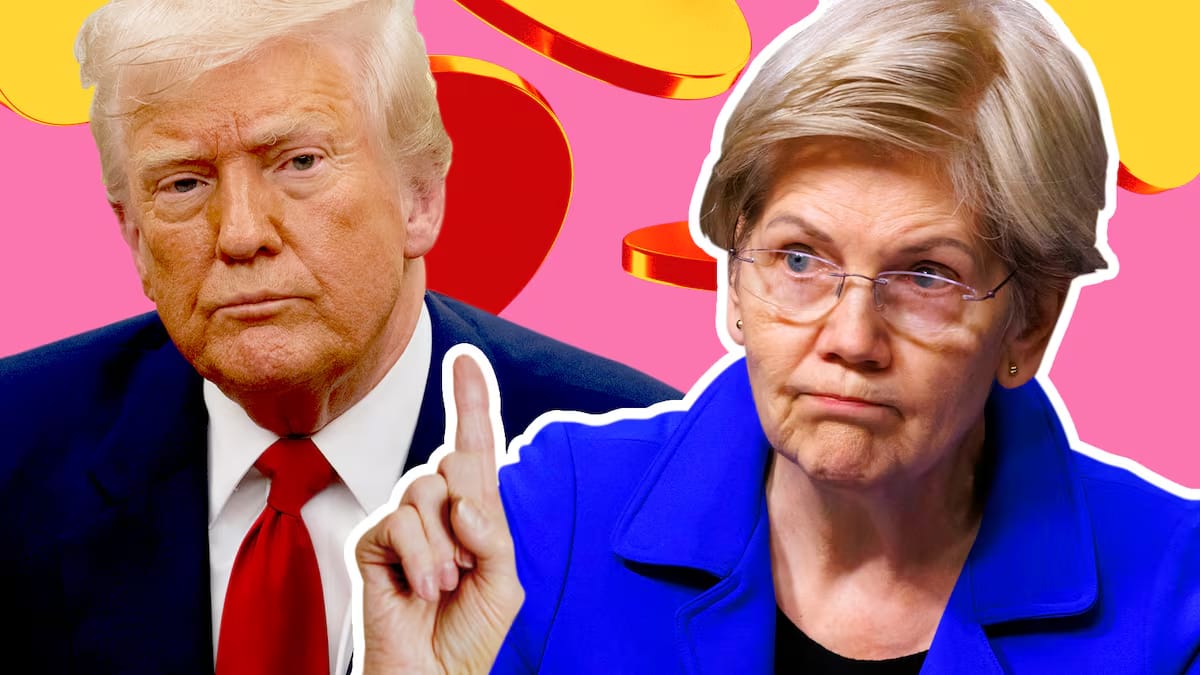
Several Democrat Senators are demanding answers from a Trump Administration official who disbanded a crypto-focused team of prosecutors while holding hundreds of thousands of dollars in digital assets himself.
That decision could have violated federal conflict-of-interest laws and be punishable by up to five years in prison, the senators said in a letter addressed to the official, Deputy Attorney General Todd Blanche.
The January 28 letter was authored by six senators who have often clashed with the crypto industry, including Democrat Senator Elizabeth Warren of Massachusetts.
Post of the week
Maybe former SEC Commissioner Gary Gensler wasn’t so bad after all?

DL News is an independent news organisation that provides original, in-depth reporting on the largely misunderstood world of cryptocurrency and decentralised finance. From original stories to investigations, our journalism is accurate, honest and responsible.
Forwarded by a friend? subscribe here.
